
Taj Mahal and the world of tandoori dishes: what a 480-degree clay oven adds to Indian cuisine
2026. 06. 30.
The 480-degree heat of the tandoori oven, the smoke of charcoal, and the long yoghurt-based marinade together create the flavour that makes tandoori grill one of the most exciting parts of Indian cuisine. In the kitchen of Taj Mahal, this technique comes to life every day: meat, fish, paneer, and naan are prepared in it, with bold spices and distinctive roasted edges.
In Punjabi villages, there was once a communal tandoor in the central square. In the mornings, women and children brought the kneaded dough, while the men arrived with freshly seasoned meat. Life revolved around the clay oven: roti was baked there, marinated chicken was roasted there, and people often sat down nearby to talk.
That oven is still present in the kitchen of the Taj Mahal today. Its temperature is the same as it was centuries ago: around 480 degrees Celsius. In an oven like this, textures and flavours are created that an ordinary oven simply cannot reproduce. In this article, we look at what a tandoor is, how tandoori dishes are made, and which dishes await you in our restaurant.
What is a tandoori oven, and how does it reach 480 degrees?
A tandoori oven is a bell-shaped clay vessel. According to some sources, it was once built from fine clay, reinforced with grain husks and animal hair. It was either sunk into the ground or placed above ground, and heated from below with wood or charcoal. Inside, the temperature can reach up to 480 degrees Celsius. At this heat, anything attached to the wall or placed inside on skewers cooks within seconds.
The shape of the oven also matters: its narrow opening and rounded interior guide the hot air around the food. Indian cooks also made use of the radiant heat that remained for hours after the oven had been switched off. Traditionally, the slow-cooked lentil dish Daal Makhani was thickened and finished in the residual heat of the oven as it cooled.
The walls heat up and retain the temperature. Once heated, a tandoor can operate for hours after a single firing. Meat placed on skewers hangs directly above the embers; dripping fat falls back onto the charcoal, burns, and the rising smoke infuses the meat. This creates the characteristic, lightly roasted smokiness that can be recognised in every dish prepared on a tandoori grill. The smell of charcoal, the meat’s own fat, and the radiant heat of the oven walls shape the flavour together.
The tandoor is not a new invention. Similar clay ovens have been found in the archaeological remains of the Indus Valley Civilisation, dating to around 3000 BC. For centuries, it served as communal infrastructure in Punjabi villages: every village had a shared oven in the centre, where families brought dough and meat. After the partition of India in 1947, when Punjabi families moved from Peshawar to Delhi, the tandoor became a shared tool of Indian restaurant kitchens across the country.
In our restaurant, we use a gas-fired tandoori oven. This is standard practice across Europe and Hungary, as charcoal-fired versions are not permitted. Today, even many modern kitchens in India have switched to this type. It produces less smoke and is healthier to use.
The three foundations of tandoori dishes: marinade, spices, and heat
The character of tandoori grilled dishes is built on three elements, and all three are needed for the distinctive flavour.
The first is the yoghurt-based marination. The acidity of the yoghurt — homemade in our kitchen — tenderises the meat fibres without damaging them. It works more gently than lemon juice or vinegar. The fat in full-fat yoghurt carries the fat-soluble aromas of the spices, allowing the spice character to penetrate the meat in a way that neither water-based nor oil-based marinades can achieve. The spices mixed into the yoghurt soak into the whole piece of meat, so the flavours and aromas permeate the entire dish.
A basic marinade requires at least four hours. In the kitchen of the Taj Mahal, the meat rests for longer, usually overnight, so the spices can fully infuse it. The marinade is the foundation of the dish’s character: Kashmiri chilli, turmeric, ground cumin, fresh ginger-garlic paste, and the chef’s own recipe determine the balance of the remaining spices, as we have also described in our article on the world of Indian spices.
The second element is Kashmiri chilli and turmeric. The typical deep red colour of tandoori grill dishes is natural: it comes from the pigments of these spices. The high heat of the tandoor and the fat in the yoghurt deepen this colour further through the Maillard reaction. One of the special qualities of Kashmiri chilli is that it provides intense colour with relatively little heat. This is why tandoori chicken or salmon tikka can be bright red without the spiciness overpowering the meat's natural flavour.
At Taj Mahal Restaurant, we use our own blend made from fresh spices in the marinade. We do not use the colourings or artificial additives that give many shop-bought tandoori spice mixes their vivid red colour. The colour and flavour of our dishes come from the aroma of wonderful spices.
The third element is heat. A traditional gas oven works at 220–250 degrees Celsius. A tandoor works at almost twice that temperature. At this heat, the surface of the meat cooks and grills within seconds, while the inside remains juicy and tender. This soft texture is the real hallmark of tandoori dishes, and it is also why they are so difficult to reproduce at home: an ordinary kitchen oven simply cannot provide as much heat as a tandoori oven.
Tandoori, tikka, seekh kebab: what is the difference?
On European restaurant menus, these names often appear almost as synonyms. In reality, they refer to three distinct techniques associated with the tandoor.
Classic Tandoori Chicken is a bone-in chicken cooked in the tandoor. The bone slows heat transfer, so the meat remains juicy for longer while the skin grills at high temperatures. This dish can also be ordered as a whole chicken if the guest is looking for a festive platter.
Tikka refers to boneless pieces of meat cooked on skewers. Chicken Tikka, Lamb Tikka, and Salmon Tikka all belong to this category. Because the pieces are smaller, they cook faster, and the spices fully penetrate the cubes of meat. In a tikka dish, the character of the marinade is felt more intensely than in a whole tandoori chicken.
The Taj Mahal menu includes several versions from the tikka family, such as Malai Tikka with its creamy cashew-based marinade, and Mint Tikka with its fresh mint marinade.
Seekh Kebab, on the other hand, is made from minced lamb. The seasoned meat mixture is shaped around a flat metal skewer — “seekh” itself means skewer. The skewer conducts heat into the centre of the meat, so it cooks evenly without drying out. Minced meat does not receive a yoghurt-based marinade; the spices are mixed directly into the meat.
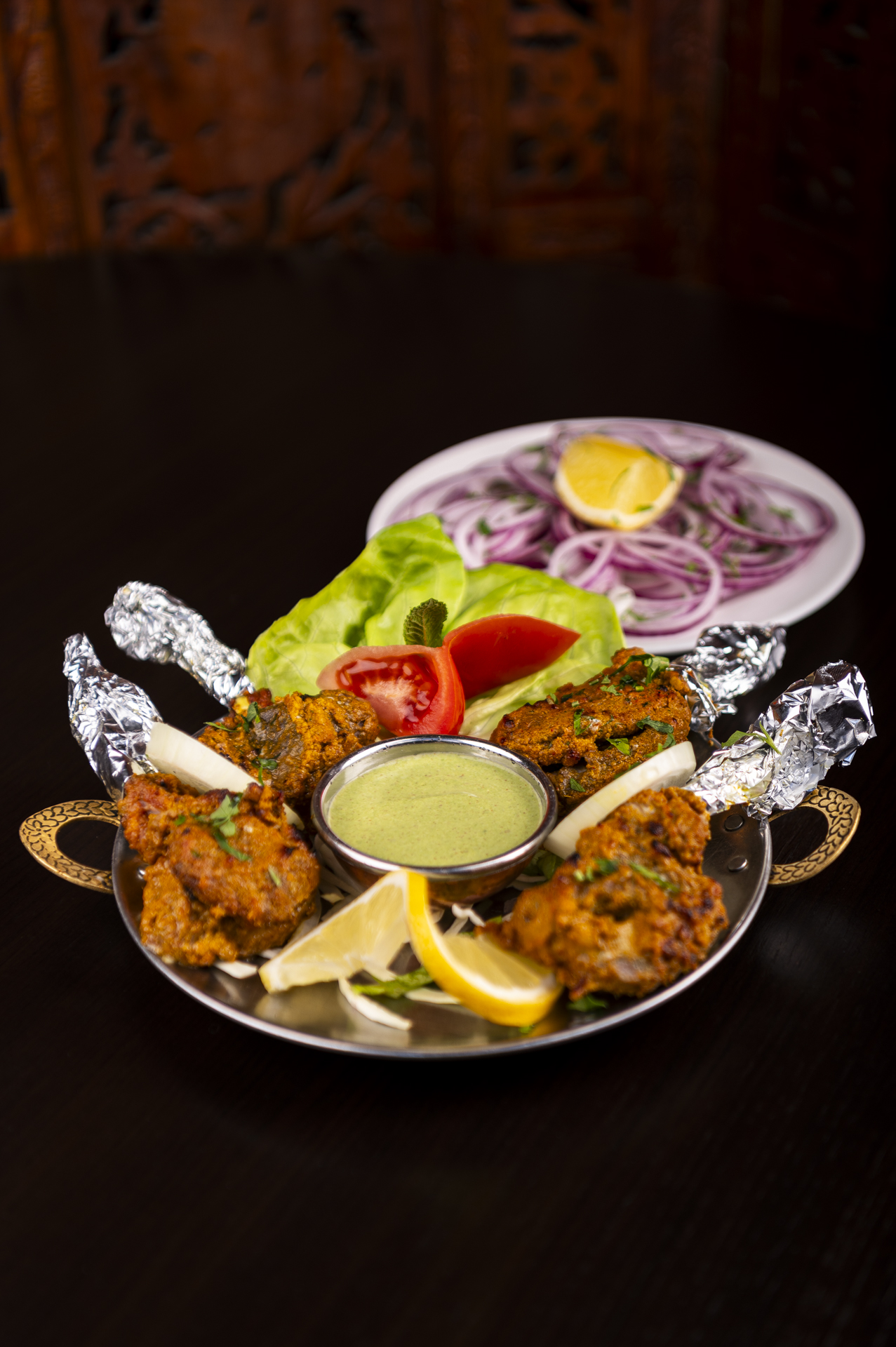
Seekh Kebab Lamb is one of Taj Mahal’s bold, spicy tandoori dishes: fresh ginger, garlic, coriander, and garam masala create the kebab's full flavour profile. There are many lesser-known and special kebab recipes, including vegetarian options. Some kebabs are prepared on a hot plate rather than in the tandoori oven. On our menu, Hara Bara Kebab is one such dish: a special vegetarian delicacy made from spinach and vegetables, filled in the middle with Indian cheese. Kebab made from potatoes and lentils is also especially delicious and popular in India.
Tandoori chicken from Moti Mahal to Taj Mahal
The tandoor is thousands of years old, but tandoori chicken as we know it today owes its fame to one man. Kundan Lal Gujral worked in the 1920s at a small restaurant called Moti Mahal in Peshawar — then part of British India, now Pakistan. Until then, the tandoor had mainly been used for baking bread. Gujral began experimenting: he placed pieces of chicken marinated in yoghurt and spices onto skewers, then lowered them into the bread oven. This idea launched an entire genre.
After the 1947 partition of India, the Moti Mahal team relocated to Delhi. They reopened the restaurant in the Daryaganj district, where tandoori chicken began its wider journey. Jawaharlal Nehru, the first prime minister of the newly independent country, became a regular guest, and tandoori chicken was often served at official state banquets. The dish quickly became a representative meal: a fixed feature of Delhi protocol dinners.
In 1962, Jackie Kennedy ate a tandoori dish on a Rome–Bombay flight, a fact reported in the press. From that point on, the tandoori grill became not only a dish of Indian cuisine, but also an internationally recognised representative dish.
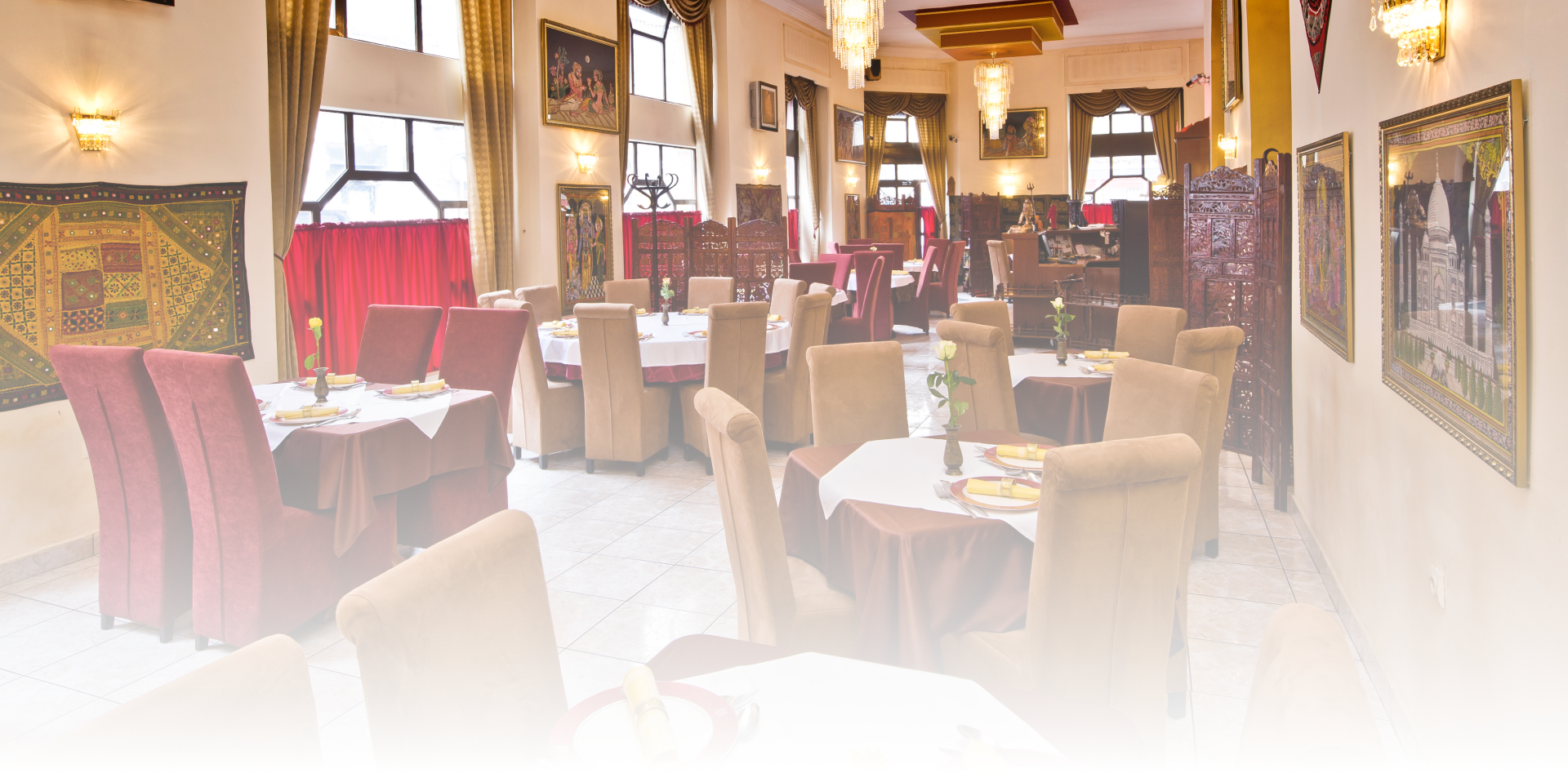
Taj Mahal Budapest continues this same tradition on Szondi Street. The chefs work according to Punjabi tradition, using freshly ground spices and homemade garam masala. The oven operates every day: in the mornings, we fire it up well before opening so that freshly baked breads and freshly grilled dishes can be served as soon as the restaurant opens.
The walls retain a stable temperature of 400–480 degrees throughout the day, so guests arriving at any time can have freshly baked bread on their plate within minutes.
Tandoori dishes are not only delicious, but also spectacular. The caramelised spots, slightly roasted edges, and juicy interior of the meat are the direct result of the high heat.
The chef measures the cooking time down to the minute for a reason. A salmon tikka cooks in 6–10 minutes, while a half tandoori chicken takes 18–22 minutes, depending on how full the oven is. Our experienced tandoori chefs, many of whom grew up around ovens like these, can judge the grilling time by sight.
The dishes of the Taj Mahal grill by category
The tandoori grill section of the menu covers four meat categories as well as vegetarian options. Guests can choose from chicken, lamb, seafood, and cheese. For a first tasting, the Tandoori Sampler for two is the safest choice: it offers a taste of all the main grilled dishes, allowing guests to explore the full range on a single platter.
The chicken tikkas are prepared with different classic tandoori marinades. Malai Tikka is marinated in a cashew- and cream-based marinade; the word “malai” means cream. This dish is a favourite with children because it is not spicy at all. Many guests who do not enjoy piquant flavours begin their discovery of Indian cuisine with this dish.
Mint Tikka brings fresh mint into the classic yoghurt base, giving it a lighter spring and summer character.
Chicken Tikka Achari, by contrast, is piquant: the spicy achari oil — with mustard, onion seeds, and heat — creates a very different direction from the regular tandoori marinade.
Tandoori Chicken Half is the most traditional grilled dish on the bone: a halved chicken, marinated for a long time, then placed whole in the oven.
Among the starters, you will also find Tandoori Chicken Wings, in which marinated, spiced chicken wings are grilled until crisp.
From lamb, Lamb Tikka is the classic expression of the yoghurt-based tikka marinade, naturally made from boneless pieces of meat. Seekh Kebab Lamb is minced lamb, as described above in the kebab section.
Lamb Chops belong to an entirely different category: prepared according to an old court recipe of kings and maharajas, the lamb chops are marinated with ginger and exotic spices, then grilled in the tandoor until tender. The bone and fat are part of the character here too; the high heat sears the marinade onto the outside, while the meat remains juicy beside the bone. This is one of the most special tandoori experiences on our menu.
On the seafood side, Salmon Tikka shows how versatile the tandoor can be: fish can also be prepared in it, and the thin, high-fat salmon fillet cooks in moments at tandoor temperature. The yoghurt-based marinade works surprisingly well with the flavour of the fish and offers an unforgettable taste experience.
Prawns Tikka and Garlic Prawns Tikka are made with tiger prawns. The sweetness of the prawns and the spicy marinade create one of the most distinctive experiences among tandoori dishes. Prawns prepared in the tandoori oven become tender while retaining their freshness — a true gastronomic experience.
The vegetarian side of the grill section is represented by Paneer Tikka Achari: homemade Indian cheese marinated in achar spice oil. The starters also include Hara Bara Kebab and Tandoori Aloo as vegetarian options. Tandoori Aloo is grilled potato filled with Indian cheese, vegetables, coconut, and cashew, and is also one of the milder dishes. It is a favourite among our Hungarian guests.
Breads on the wall of the tandoor
The flatbreads served as a side dish are baked by Indian cooks in the tandoor oven. Depending on the type of bread, the dough is rolled flat and pressed directly onto the inner wall of the tandoor with a cushion-like tool called a gaddi. The 300–480-degree clay wall bakes the inner side of the flatbread within seconds, while the side facing the oven becomes crisp.
Within a few minutes, the naan bubbles up and the blisters bake through. This is where its spotted texture comes from: partly charred, partly soft. It is impossible to achieve this texture in an ordinary oven because of the high heat and the unique way the tandoor works.
The best-known Indian bread, naan, is always made from white flour, which gives it its special soft, torn texture. It has many widespread variations.
The simplest version is Plain Naan, usually sprinkled with tiny kalonji seeds. Butter Naan is not simply plain naan brushed with butter, but a special layered flatbread made according to a particular recipe. Even without any spices, it is delicious in itself. Garlic Naan is fragrant with fresh garlic.
Stuffed naan breads are already special on their own. Peshawari Naan is a sweet version filled with cashews, almonds, and coconut, evoking the Peshawar–Moti Mahal line. Everyone’s favorite, Paneer naan filled with homemade fresh Indian cheese, while Keema Naan is filled with spicy minced lamb — practically a meat-and-naan combination in one bread.
Masala Naan is a speciality of our restaurant: a flatbread sprinkled with finely chopped onion, tomato, and red chilli. The chilli grilled onto the surface gives it a distinctive flavour. One of our kind, returning regular guests, jokingly orders it as “pizza naan.”
Aloo Kulcha and Onion Kulcha are stuffed flatbreads similar to naan, also baked on the wall of the tandoor.
Today, even in India, naan is mostly eaten in restaurants, as it cannot be made at home without a tandoor. However, bread remains an essential part of Indian home cooking. The most important varieties are parathas, rotis, and chapatis. These are always made from wholemeal flour and form an important part of everyday Indian meals. At home, Indian housewives bake them on a hot plate, called tawa daily.
Chapati is most commonly eaten with vegetables and lentils. Paratha, loved by everyone in India, is flavoured in many different ways. It may be filled with spiced potato, onion, or fresh paneer cheese, then fried with butter on a hot plate. In Indian homes, paratha is often eaten as a simple, quick, yet very nourishing meal. Its essential companions are fresh yoghurt, butter, and homemade pickles — spicy preserves made from mangos or other fruits and vegetables.
In restaurants, the tandoor-baked version of chapati is Tandoori Roti: a thin, lighter, simpler flatbread that is a little drier than naan. Laccha Parantha is also a tandoori variation: a folded wholemeal bread speciality. Jodhpuri Parantha is a flaky, layered Rajasthani delicacy flavoured with spinach, while Pudina Parantha is a Punjabi favourite flavoured with mint; both are mouth-melting delicacies.
Choosing bread is largely a matter of taste. Our chefs suggest presenting a diverse assortment of breads on a larger table, so guests can experience a range of textures throughout their dinner.
Why is it worth trying?
The tandoori grill is one of those techniques in Indian cuisine that cannot be reproduced at home. The 480-degree heat, the long yoghurt-based marinade, and the freshly ground spices are all essential, and together they can only truly come together in a real Indian clay oven. A classic household gas oven can at best produce a somewhat similar texture, but it cannot create the smoky character.
The tandoor at Taj Mahal on Szondi Street operates every day. Anyone curious about the special dishes described above should try them in person. Book a table at Taj Mahal Indian Restaurant and choose from our tandoori grill selection.