
What is paneer, and how is it used in Indian cuisine? From fresh milk to richly spiced dishes
2026. 09. 22.
If you enjoy Indian cuisine, there’s a good chance you have already come across the Indian cheese, Paneer on a menu: firm white cubes of cheese served in a spicy sauce, with spinach or tomato, or roasted in a tandoor. Paneer is one of India’s distinctive fresh cheeses. Made from simple ingredients, its unusual texture makes it suitable for a remarkably wide range of dishes and cooking techniques.
At first glance, one of the most interesting ingredients in Indian cuisine seems surprisingly simple: a fresh white cheese made from milk that holds its shape during cooking and frying. Its mild flavor leaves plenty of room for spices to shine, while its firm structure allows it to be prepared in many different ways.
That is why the same fresh Indian cheese might appear one day in a thick spinach sauce, the next in a tomato-based gravy, on a hot griddle, or even inside a tandoor. On the Taj Mahal menu, paneer takes on many different roles, from creamy main courses to spicy bites, grilled dishes to stuffed naan
What exactly is paneer?
Paneer is a fresh, unaged Indian cheese that is considerably simpler to make than many European cheeses. Milk is heated and then acidified, causing the milk proteins to coagulate. The solids separate from the whey, after which the curds are strained, gathered, and pressed to remove the right amount of moisture. India’s National Dairy Development Board likewise describes the heating of milk and acid coagulation as the basis of paneer production.
The result is a white, firm cheese that can easily be sliced or cut into cubes. Its flavor is fresh, milky, and subtle, which allows it to absorb the character of the spices, sauces, and toasted ingredients around it. This quality is one of the main reasons paneer works so well in such a broad range of Indian dishes.
A fresh cheese that needs no aging
In European cheese traditions, aging often defines a cheese's character. Cheddar, Parmesan, and other mature hard cheeses continue to develop over weeks, months, and sometimes even years. Paneer follows a very different path. It can be used fresh as soon as it is made, so its flavor is shaped primarily by the milk itself and, later, by the dish's seasoning. Food science literature classifies it as an unaged cheese produced through heat and acid coagulation.
It is precisely this restrained character that makes paneer such a useful ingredient. In a tomato, onion and spice-based sauce, those aromas take centre stage. Cooked with spinach, the earthier notes of the greens become more prominent. Marinated with spices and roasted in a tandoor, the browned surface and seasoning define the character of each bite.
How is paneer made?
Paneer is made by adding an acidic ingredient to hot milk. Within a short time, the milk separates into two parts: white curds begin to form, surrounded by the thinner liquid whey. Traditional and industrial methods may differ in detail, yet the basic principle remains the same: heat and acidity cause milk proteins to aggregate and separate from the liquid.
The curds are then separated from the whey using cloth or a suitable strainer. At this stage, the cheese is still soft, moist, and prone to falling apart. To make it firm enough to cut neatly into cubes later, some of the excess liquid needs to be pressed out.
"The apparent simplicity of the process can be deceptive—it truly takes expert hands to get it right. Factors like milk composition, temperature, acidity, and pressing technique all determine whether the paneer turns out soft, springy, or dense."
Once the whey has been removed, the remaining milk solids create a dense base that can then be pressed into a cheese firm enough to slice.
The way paneer is prepared highlights its unique role in a dish. Unlike aged cheeses, paneer does not develop strong, overpowering aromas that might dominate a meal. Its flavor remains delicate, allowing it to pair naturally with cumin, coriander, fenugreek, ginger, garlic, chili, and the many other spices essential to Indian cuisine.
Freshly strained curds are still soft, crumbly, and moist. During pressing, some of this liquid is removed while the curd particles bind more tightly together. This creates the firm yet resilient texture that allows paneer to be cut into even cubes or slices.
Texture is particularly important because paneer is often exposed to intense heat in Indian cooking. It may be seared in a hot pan, simmered in a sauce, or threaded onto skewers and grilled. It needs to be firm enough to stay intact while still retaining a pleasantly soft center.
Moisture content is therefore a matter of balance. Paneer that has been pressed very dry can become firmer, while a moister cheese has a softer texture. The ideal consistency also depends on how the paneer will be used.
Why doesn’t paneer melt when cooked?
This is perhaps the feature that most surprises diners accustomed to European cheeses. When a cube of paneer is placed in a hot pan or inside a tandoor, it does not begin to spread and melt like mozzarella. Its surface may brown, and its center heats through, yet the cheese keeps its shape. Food science literature describes paneer as a non-melting cheese.
The reason lies in the protein structure created during production. Heating the milk and coagulating it with acid forms a dense protein network that reacts differently to heat from the structure found in rennet-set, aged, or stretched-curd cheeses.
From a culinary perspective, this makes an enormous difference. Cubes of paneer can remain intact inside a richly spiced sauce, be grilled on skewers, browned on a hot griddle or even used as a filling. The same ingredient can therefore appear in dishes with completely different textures.
Why paneer works so well in the tandoor
A tandoor operates at extremely high temperatures, so ingredients need to cook quickly without losing their structure. Paneer cubes are particularly well suited to this method: the outside with marination can brown rapidly while the center remains soft.
A good example from our menu is Paneer Tikka Achari. For this dish, the Indian cheese is marinated in a piquant achar spice oil before being grilled. The intense heat creates a lightly charred, roasted surface, while the spices in the marinade concentrate around each piece of paneer.
The role of paneer in vegetarian Indian cuisine
Meat-free cooking varies widely across India. Legumes, vegetables, grains, dairy products, spices, and fresh herbs are combined in countless ways, and fresh cheese occupies an especially versatile place among them. India’s dairy industry organization describes paneer as a traditional dairy product widely consumed throughout the country.
Its texture is especially important in vegetarian Indian cooking. Paneer brings a dense, substantial element to the plate that differs from vegetables or pulses, allowing it to become the centerpiece of a main course. It is best thought of not as a simple addition, but as an ingredient around which an entire recipe can be built.
This can also be seen in the names of Indian dishes themselves. In Palak Paneer, Methi Paneer, or Karahi Paneer, the cheese appears in the name, while the cooking method or defining sauce gives the dish its individual character.
Paneer on the Taj Mahal menu
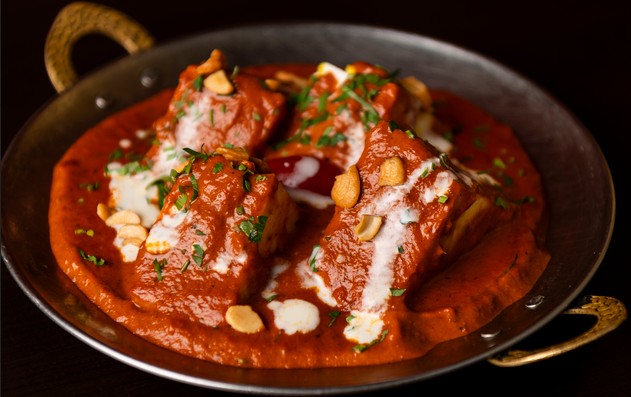
Few ingredients appear in as many different forms and cooking techniques on a single menu as this fresh cheese. Taj Mahal’s vegetarian selection includes Palak Paneer with creamy spinach; Paneer Pasanda, a chef’s masterpiece; Methi Paneer with cashews and fenugreek leaves; Karahi Paneer with a spicy onion and capsicum sauce; Paneer Butter Masala in a rich tomato gravy; Paneer Tikka Masala, the vegetarian counterpart to the famous Chicken Tikka Masala; and Tava Paneer, cooked on a hot plate and seasoned with star anise. In each case, the preparation method, sauce, and spices create a distinct experience."
In Paneer Pasanda, for example, Indian cheese stuffed with cashews is served in a cashew-and-tomato sauce. For Paneer Tikka Masala, the paneer is grilled first, then added to a spiced onion and tomato sauce. Tava Paneer is prepared on a hot griddle with a spicy tomato sauce.
The ingredient remains the same in each of these dishes, yet the cooking technique creates a new texture and a different flavor balance. This makes it easy to understand why paneer holds such an important place in Indian cooking.
A cheese that adapts to the character of the dish
A strongly aged cheese usually brings its own distinctive aroma into every dish. Fresh Indian cheese behaves differently. Its gentle, milky flavor allows the surrounding ingredients to come forward, which is why the same cheese can work equally well in mild, creamy dishes and in intensely spiced, fiery ones. As it's soft and tender it makes it an absolute favorite for children.
The same versatility is evident in its texture. When grilled, the browned surface becomes an important part of the experience. In a saucy dish, the paneer takes on the surrounding aromas, while in naan or dosa it becomes part of the filling.
That is why one paneer dish tells you relatively little about what the next one will taste like. The ingredient itself remains constant, while the spices and cooking techniques built around it can give it an entirely different character.
Moreover, in India, fresh cheese is also used to make delicious Indian sweets. Many of these desserts use chhena, a close relative of paneer made through a similar process but left softer and moister, without being pressed into a firm block. It forms the base of rasgulla, soft cheese balls cooked in sugar syrup, and sandesh, made by working fresh cheese together with sugar. The special cheese dessert prepared with saffron milk, Rasmalai, can also be found on our restaurant's menu. Its mild, milky flavor pairs well with sweet ingredients, much like cottage cheese, the fresh curd cheese used in European and Hungarian desserts.